
News
Skip to main content

Bachelor of Science in Control and Instrumentation
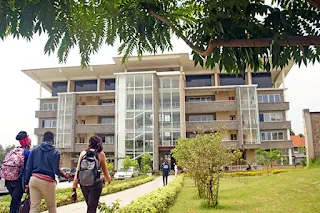
Bachelor of Science in Control and Instrumentation

Bachelor of Science in Control and Instrumentation - Strathmore University
The bachelor of science degree in control and instrumentation is a five-year degree programme that aims to provide students with sound theoretical and practical training in the design, operation and maintenance of automated process control systems and measurements systems.

In the first two years of the bachelor program, students are introduced to wide range of foundation science and engineering topics such as mathematics, physical, material sciences, computer programming, circuit theory fundamental of electronics, digital circuit and design, electrical machines, electrical and electronic measurements, and introduction to signals and systems.

In the third and fourth years, courses are more specialized and industrially oriented including industrial process control, optical/electronic communication and engineering project. The lectures and laboratories, including industrial attachment, provide the student with invaluable experiences and knowledge of the design and implantation of automation process and instrumentation systems.

Career Opport unities

Graduates of this programme are required by industries such as power stations, steel plants, refineries, food/beverage factories and cement plants.  They have a multidisciplinary role to play. One may choose to move sideways into other career areas either within or outside their industry in such areas as purchasing, sales, marketing, finance, IT or general management. Those who have an aptitude use their expertise they have gained in industry and engage in consultancy work, academic research in universities or acquire a tutoring/coaching role as a lecturer or trainer of instrumentation engineers.

The List of Bachelor Degree Programmes (Faculties) & Their Jop Opportunities

Top Quote - If the lessons of history teach us anything it is that nobody learns the lessons that history teaches us. Strathmore University

Popular posts from this blog

Matokeo ya kidato cha pili

MATOKEO YA KIDATO CHA PILI 2026  - FTSEE NECTA Results 2026/2027 FORM TWO NATIONAL ASSESSMENT FORMATS (Matokeo kidato cha pili mwaka 2025)   Share on WhatsApp | Share On Twitter MATOKEO YA UPIMAJI WA KITAIFA KIDATO CHA PILI (FTNA) 2025/2026 YEMETANGAZWA Here on this page we promise you to get the latest information on matokeo ya kidato cha pili as and when they are published by necta Tanzania . Just scroll down to  view all the exam results for form two this year and other previous years. You may also view form four exam results 2025 (matokeo kidato cha nne)  and also SFNA Results (matokeo darasa la nne 2025 Hapa)    How many students passed Form two necta exams? (Ni wanafunzi wangapi waliofaulu mtihani wa kidato cha pili 2025?) While announcing the form two exam results Dr. Mohamed  said that 680,574 out of 796,825 students with results equal to 85.41 percent have succeeded in continuing to form three who have obtained division 1, 2,...

NACTE - National Council for Technical Education

NACTE (National Council for Technical Education) Why do we learn? So that we can lead the future. Leadership isn’t always so high profile. Setting an example to others by, for example, lining up for a lesson, quietly and responsibly is an act of leadership. It require; seeing the bigger picture, being ambitious and wanting to improve your skills. National Council for Technical Education (nacte) NACTE is an abbreviation of ( National Council for Technical Education ) is a corporate body established by the National Council for Technical Education Act, 1997 (Act No. 9 of 1997). The Act provides a legal framework for the Council to  coordinate provision of technical education and training and establish an efficient national qualifications system that will ensure that products from technical institutions are of high quality and respond to changing needs as well as technological innovations in the world. Definition Of Technical education Technical education in this context is...

The Human Cell

The Human Cell Cells are the very essence of life . Cells may be defined as the basic living, structural, and functional units of the human body. They vary greatly in size, chemical composition, and function, but each one is a remarkable miniaturization of human life. Cells move, grow, ingest food and excrete wastes, react to their environment, and even reproduce. This chapter provides a brief review of the basics of a cell, including cellular components, communication, energy, and transport. An overview of the natural life span of a typical cell is provided because of its importance in nutrition and disease. multicellular organisms Cells of all multicellular organisms are called eukaryotic cells (from the Greek eu, meaning “true,” and karyon, “nucleus”). Eukaryotic cells evolved from simpler, more primitive cells called prokaryotic cells (from the Greek meaning “before nucleus”).The major distinguishing feature between the two cell types is that eukaryotic cells possess a defined n...

Other Related News.


Contact Us Follow Us On WhatsApp